
Should You Put a Ceramic Coating Over Your PPF?
Short answer. Yes. Here is why.
PPF Is Organic. That Is Its Weakness.
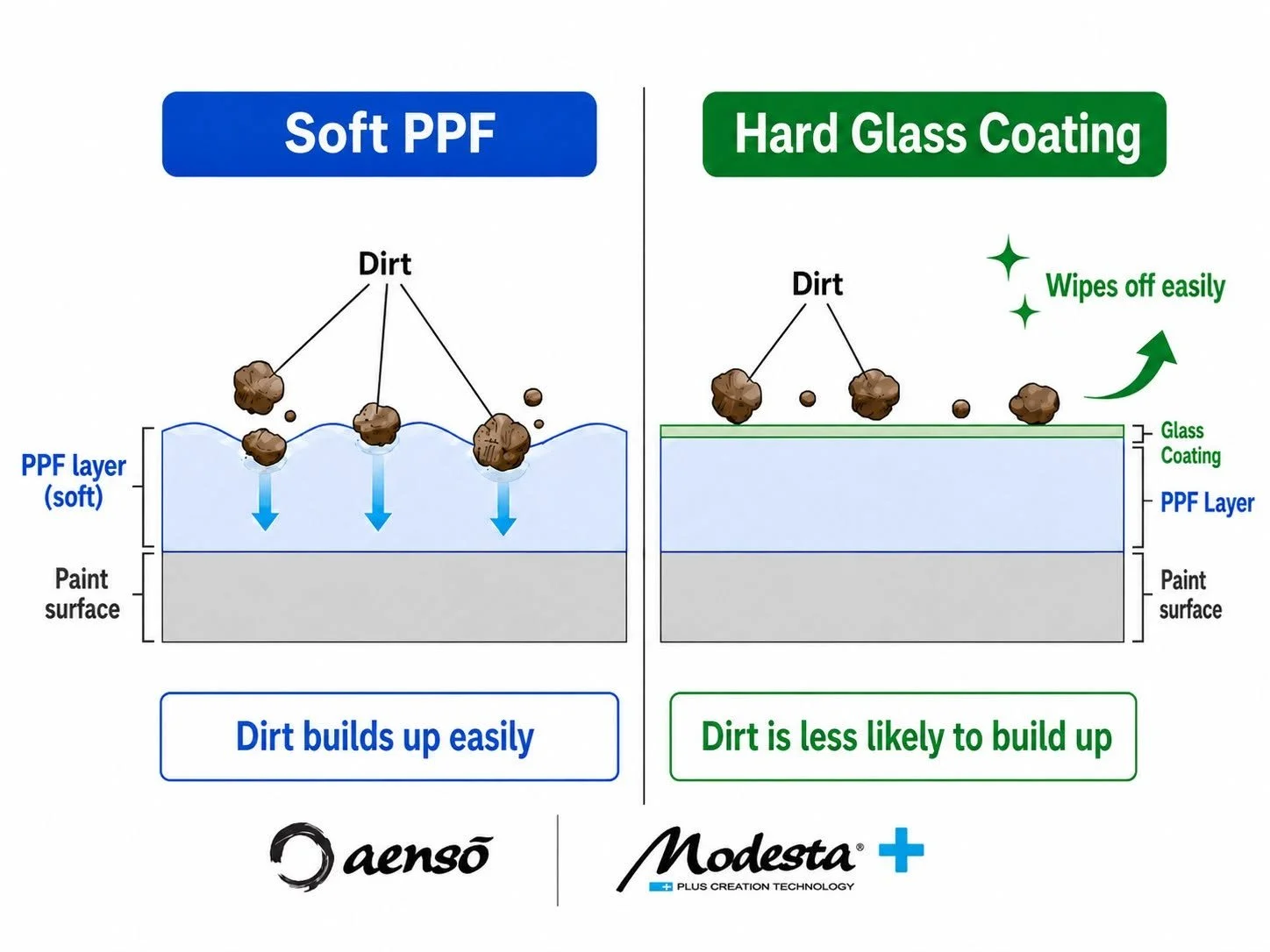
Paint Protection Film is thermoplastic polyurethane. A soft, elastic, carbon-based material. That organic molecular structure is exactly what makes it flexible enough to apply to a car and peel off when needed. It is also what makes it vulnerable to the natural environment over time.
UV, water and oxygen work on organic materials. Left unprotected, PPF accumulates surface contamination more easily than bare paint because the surface is softer. It deteriorates faster than it needs to.
Glass Coating Addresses That Weakness Directly
An inorganic glass coating applied over PPF creates a barrier between the film and the environment. The coating's silicon dioxide structure does not oxidise. It limits the film's direct contact with water and air. It suppresses the deterioration that would otherwise happen over time.
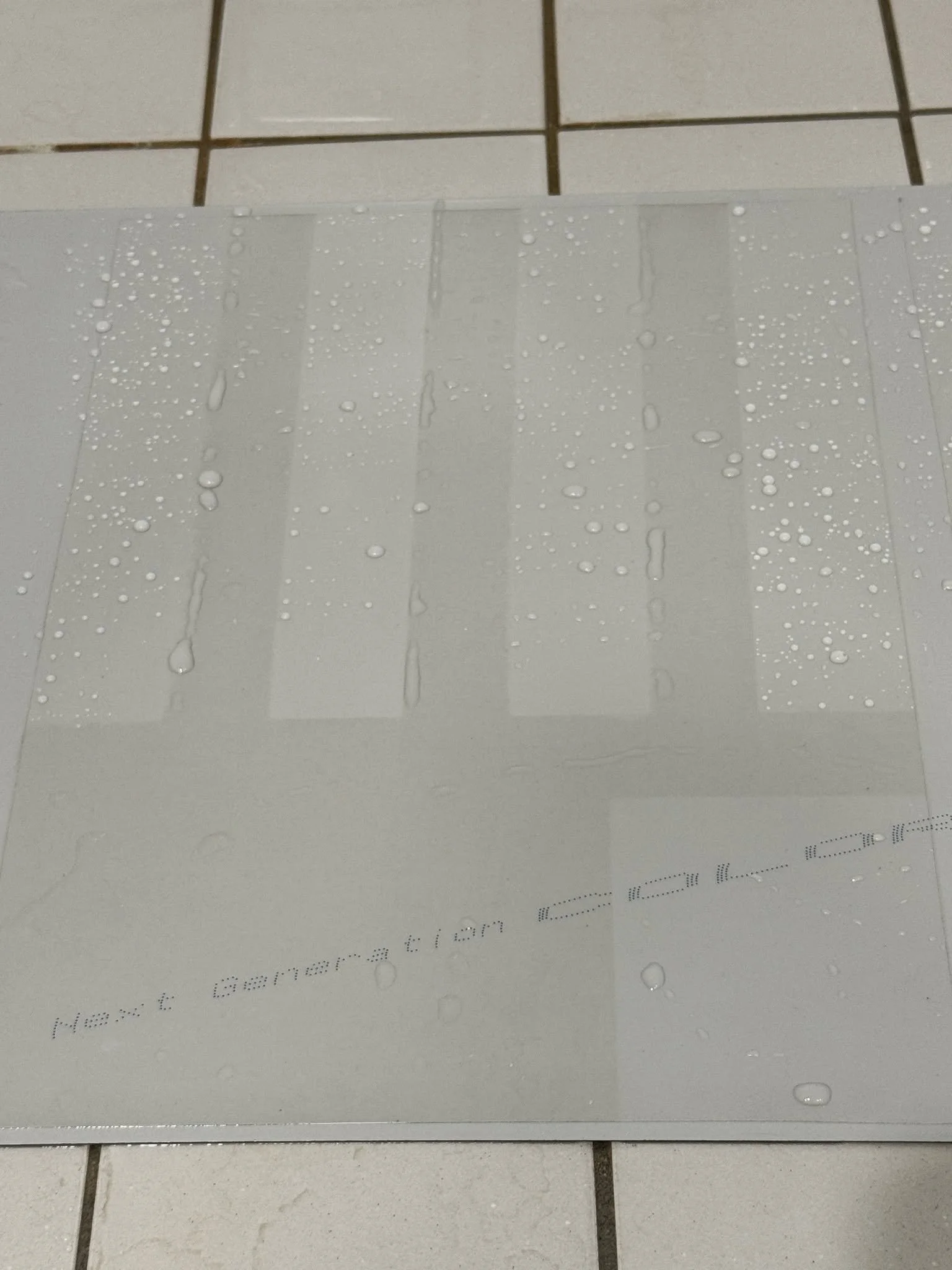
The surface also becomes hydrophobic. Water beads and runs off. Contaminants bond less readily. The film stays cleaner and easier to maintain.
What Does the Coating Do to Self-Healing PPF?
This is the question most people ask. If you coat a self-healing PPF, does the coating stop it healing?
The answer is no. The self-healing happens in the film layer itself when heat is applied. A glass coating applied over the top does not prevent that. The film still heals from light scratches with a heat gun or warm water. The coating layer above it that has been scratched will not return to its original state, but the film underneath heals as intended.
The coating also survives the expansion and contraction of PPF on the car. Because it is applied after the film is bonded to the vehicle, the actual movement involved is minor. The coating is a thin film that moves with the substrate. No peeling. No cracking.
The Four Year Gloss Test
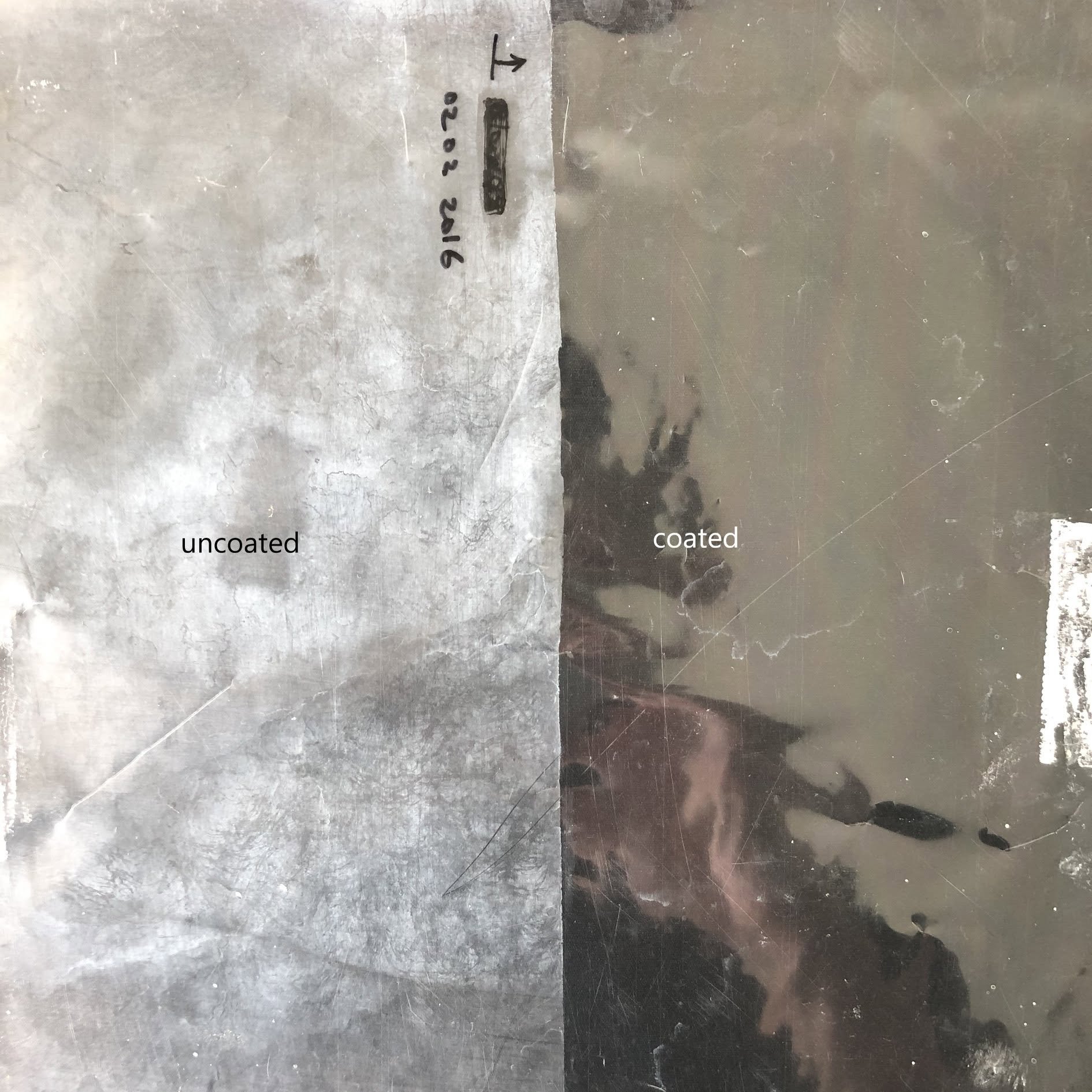
There is real test data on this. A self-healing PPF was coated on the right half only, then left outdoors in a natural environment for four years. UV, rain, dust, everything.
At four years, gloss measurements were taken with a calibrated gloss meter.
Coated side: 91 gloss units. That is 101% of the original uncoated new film. Uncoated side: 51.70 gloss units. That is 57.30% of original.
The coated film looked better after four years than the uncoated film looked when it was new.
That is not a claim. That is a measurement.
When Does the Coating Go On?
After the film is installed on the car. Not before.
Glass coating cannot be applied to PPF at the factory or before installation because the film will be stretched when it goes on the vehicle. A cured inorganic coating on a flexible film that then gets stretched will crack or peel. The coating goes on after the film is bonded and settled.
Is It Worth the Extra Cost?
If you are putting PPF on a car you care about and want to look after long term, the coating over the top extends the life of the film and keeps it performing at a higher level. The cost relative to the total investment in PPF is reasonable.
If you are doing a budget front end on a daily driver you will replace in two years, the coating may not make sense for you.
Tell me about the car and I will give you an honest answer on whether it is worth doing in your situation.
